The Problem with Most “Nepali” Restaurants
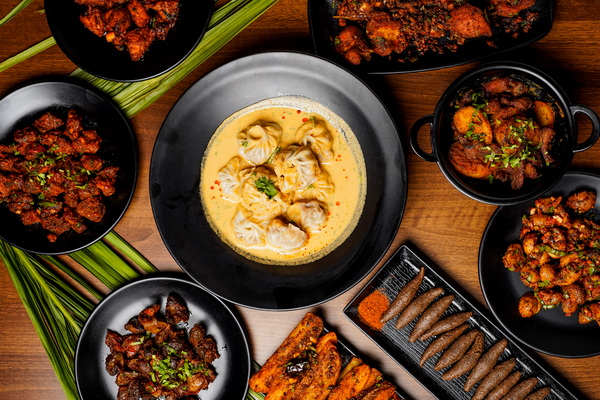
The full Mustang Thakali spread — what sets this restaurant apart
Most restaurants in India that call themselves Nepali or Himalayan offer a predictable menu: momos (often frozen or machine-pressed), thali with generic masala-based gravies, and chowmein. The specific culinary traditions of communities like the Thakali, Newari, Tamang, or Gurung — with their distinct ingredients and techniques — are rarely represented.
What Makes the Difference
1. Authentic Thakali Spicing
The use of timur (Szechuan pepper), jimbu (dried Himalayan herb), and gundruk (fermented vegetable) is non-negotiable in a real Thakali kitchen. These ingredients are difficult to source and require knowledge to use correctly. They cannot be replaced with standard Indian spice blends.
2. Kanchamba — The Rarity
Kanchamba is a traditional Thakali buckwheat finger food that is almost impossible to find outside the Mustang valley. Offering it at Mustang Thakali is a deliberate statement of authenticity. You won’t find it at most other Nepali restaurants in India.
3. Ghoken and Dhido
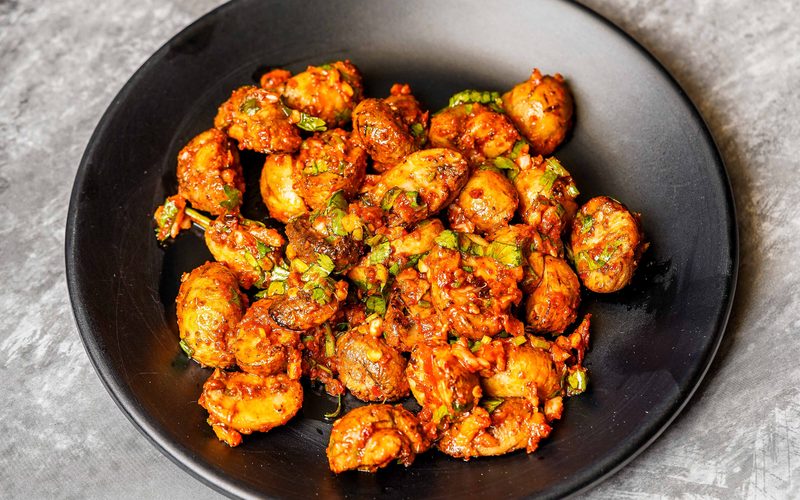
Freshly prepared snacks at Mustang Thakali, Siliguri
These traditional buckwheat preparations are the original staple grains of the Himalayan high country. Offering Ghoken and Dhido as alternatives to rice in the Thakali Thali restores the meal to its proper form.
4. Hand-folded Momo
Mustang Thakali’s momo are folded by hand, fresh daily. The fold matters — it determines how the momo holds its filling and juices during steaming.
5. Choila — A Newari Tradition
Choila is a traditional Newari preparation — flame-grilled meat marinated in mustard oil, ginger, garlic, and timur. Making it correctly requires the right cut, the right marinade, and proper flame finishing.
Dine at Mustang Thakali, 3rd Floor, Shree Bhawan Market, Hill Cart Road, opp. Hotel Bidhan Plaza, Siliguri 734001. Open every day 11 AM – 10 PM. Call +91 90462 38282.